Your website doesn't need a rebuild — it needs an architect
A rebuild is one possible response to a struggling website, not the diagnosis. First identify the constraint, the decision owner and the smallest change that can produce the required outcome.
 Kristijan CrnacINDEPENDENT TECHNICAL PARTNER · ZAGREB9 min read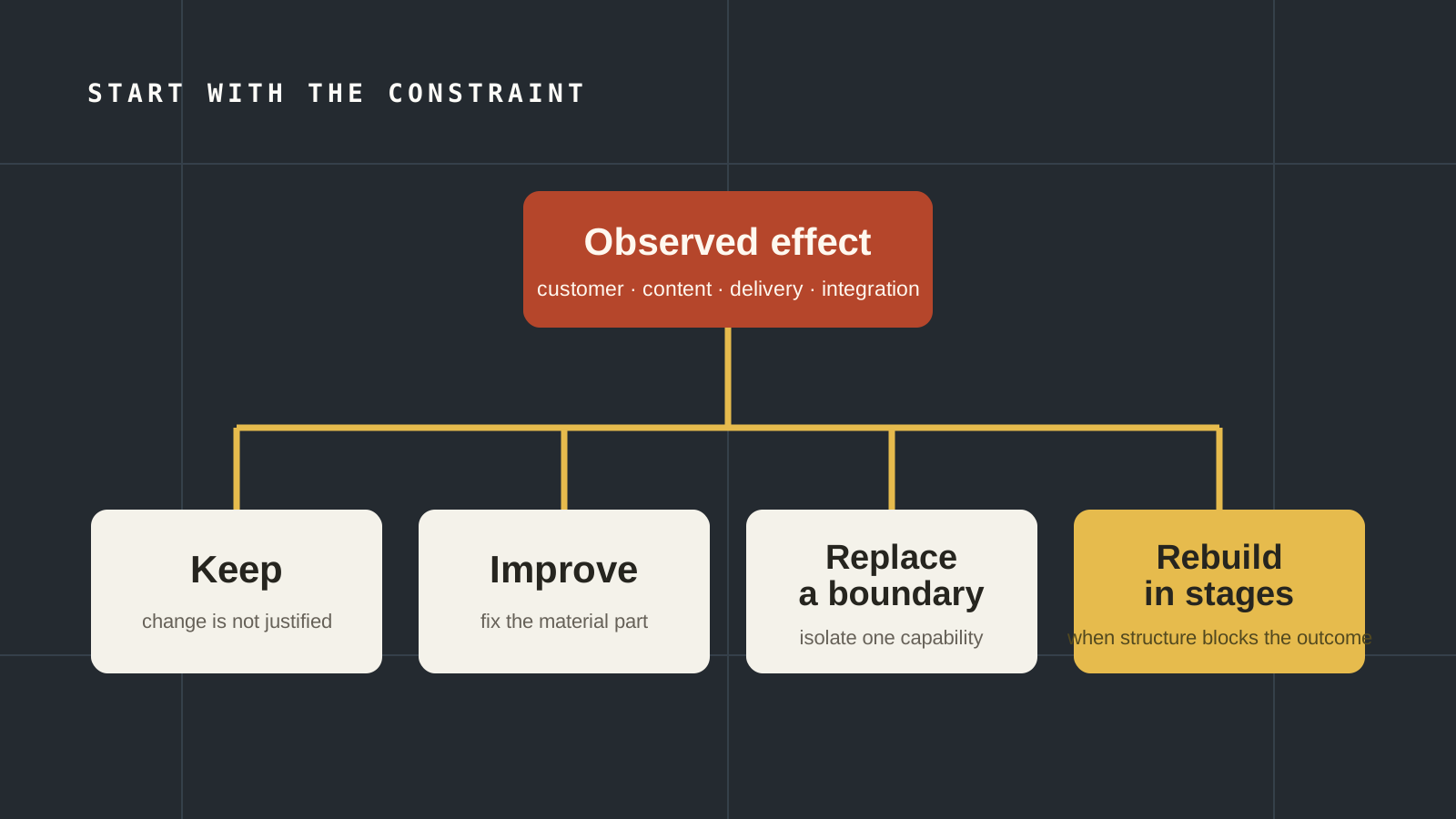
Rebuild is a solution-shaped word
A slow website, awkward content workflow, fragile integration, inconsistent experience or stalled delivery process can all produce the same sentence: ‘we need a rebuild.’ The sentence may be right. It may also be a way of skipping the harder work of naming what is actually failing.
Rebuild should be a conclusion supported by evidence, not the first name given to frustration.
A rebuild replaces many things at once. That can remove a real structural constraint, but it also creates migration, content, integration, launch and ownership work. Before accepting that disruption, the proposed route should be tested against the outcome the organisation and its customers actually need.
const decision = diagnose({ outcome, constraint, evidence,});return decision.smallestResponsibleRoute;Find the constraint before choosing the scale
Start with observable effects. Which customer journey fails? Which content change is hard to make safely? Which release or integration creates unacceptable risk? Which business decision is blocked? Then trace those effects to the narrowest credible constraint.
- A content constraint may need a clearer model, workflow or CMS boundary rather than a new presentation layer.
- A delivery constraint may sit in ownership, testing, release dependencies or unclear acceptance rather than the framework itself.
- An experience constraint may need a focused journey and component redesign, not a platform replacement.
- An integration constraint may be isolated behind a better contract while the rest of the site remains intact.
- A structural constraint may genuinely make staged repair more expensive or risky than replacement. That is the point at which rebuild becomes a serious option.
Compare four honest routes
The useful comparison is not old stack versus fashionable stack. It is the consequence of each route for customers, delivery, operations and ownership.
- 1KeepLeave the system as it is when the constraint is tolerable and a change would not justify its cost or risk.
- 2ImproveChange the journey, component, workflow or integration that causes the material problem while preserving the rest.
- 3Replace a boundaryMove one capability behind a clearer interface or onto a better-fit service without rebuilding the whole experience.
- 4Rebuild in stagesChoose replacement when the underlying structure blocks the required outcome and a staged transition has a credible ownership and validation path.
When a rebuild earns its place
A rebuild becomes defensible when the current system cannot support a required customer or business outcome without repeated high-risk work; when several critical constraints share the same structural cause; or when ownership, security, supportability or integration boundaries cannot be corrected proportionately in place.
Even then, ‘start over’ is not a delivery plan. The decision needs a migration boundary, content responsibility, integration sequence, acceptance criteria, release and rollback ownership, and a way to validate the new route before the old one is removed.
Connect the decision to delivery
Architecture is valuable here only if it changes the work. The decision should become a sequence that a team can estimate, test and hand over: what stays, what changes first, which assumption is validated next, and who accepts each stage.
The smallest responsible change is not always the smallest code change; it is the smallest route that resolves the real constraint without hiding its consequences.
For a contained customer-facing build, one owner may carry direction, content structure, visual system, implementation and launch preparation. Inside an existing product or platform, the better shape may be a defined delivery responsibility completed with the client’s team and release process. The architecture should make that responsibility clearer, not create a permanent advisory layer above it.
Before you ask for a rebuild quote
Write down the affected customer or business outcome, the observed constraint, why it matters now, the decision owner, the systems and people that must participate, and the timing that is genuinely fixed. Add the evidence already available and label the parts that are assumptions.
That context is enough to decide whether the next step is a focused technical-direction engagement, a directly scoped improvement, or a contained new build. It also makes vendor proposals easier to compare because each one has to answer the same problem instead of selling the broadest implementation it can name.
Treat the rebuild as a hypothesis. Make it earn the disruption it creates.